AI for Natural Methane: Next-Generation Modeling of Global Natural Methane Fluxes
EDS Seminar. ESIIL Working Group Showcase. Youmi Oh of the AI for Natural Methane working group discusses integrating multi-scale observations with knowledge-guided machine learning.
Abstract
Methane (CH4) is the second most important anthropogenic greenhouse gas after carbon dioxide. Natural methane sources contribute ~40% of global CH4 emissions but remain highly uncertain. The ESIIL Artificial Intelligence for Natural Methane Working Group (AI4NM) is developing a harmonized global natural methane dataset and Knowledge-Guided Machine Learning (KGML) framework to improve estimates of natural CH4 emissions across scales. By integrating process-based understanding, machine learning, and diverse observations, KGML enhances model performance, interpretability, and extrapolation capability. In this presentation, I highlight key challenges in quantifying CH4 emissions from natural wetlands and present two recent KGML applications. First, short and fragmented flux records limit our understanding of long-term CH4 dynamics and climate feedbacks. In Zhu et al. (2026), we combined eddy covariance observations, warming experiments, and biogeochemical knowledge to reconstruct multi-decadal CH4 fluxes at the 11 eddy covariance wetland sites. We found substantial variability in CH4 trends, with increases of up to 14% per decade from 2000–2024, and stronger increases at higher latitudes, highlighting the vulnerability of northern wetlands. Second, global wetland CH4 estimates remain highly dependent on modeling approach. In Smith et al. (2026), we developed a hybrid framework that combines process-based and machine learning models, leveraging cross-domain model stacking and local MODIS imagery to improve prediction skill. At the global scale, we applied conditional model selection, using machine learning where environmental conditions were represented in the training data and process-based models in more extreme environments. Together, these studies demonstrate how KGML can improve estimates of natural CH4 emissions and support the development of next-generation CH4 monitoring systems.
Speaker Bio
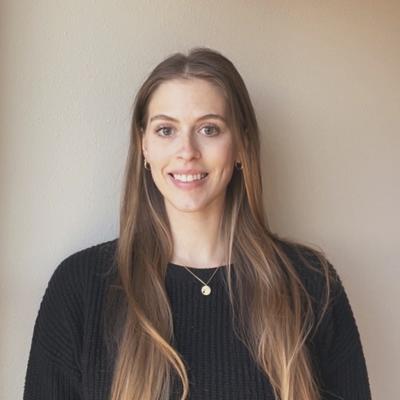
Dr. Youmi Oh studies how environmental change alters surface-atmosphere interactions with bottom-up biogeochemistry models, top-down atmospheric chemistry and transport models, and knowledge-guided machine learning for her research. Her current research as a CIRES Research Scientist working in the NOAA Global Monitoring Laboratory focuses on developing and improving NOAA’s atmospheric methane data assimilation system, the CarbonTracker-CH4. She is also a principal investigator of the AI for Natural Methane Working Group, a collaborative network of ~50 researchers spanning diverse expertise in modeling and observations.